Does a Child’s use of LEGOs Improve Their STEM Capabilities?
LEGOs have been around for a while now and have been used by many children. The connection between the toys used by children and their life or educational skills have been studied in the past. Our study aims to display a connection between the usage of LEGOS and STEM capabilities. STEM stands for: Science, Technology, Engineering & Mathematics. Specifically, we are testing for a longitudinal impact on STEM skills of children who play with LEGOs daily for one hour on school days. In this study, we dissected math capabilities into three components: numerical literacy, visuospatial working memory, and self-efficacy. We hypothesize that children who play with LEGOs Classic Block Set will display higher levels of numerical literacy, visuospatial working memory, and self-efficacy when tested two years after the completion of the LEGO after-school program.
Numerical Literacy is the person’s ability to understand mathematics. Additionally, a person’s ability to use mathematics to reason and solve mathematical problems, basic and complex, in real world situations. Volume, quantity, one to one correspondence, symmetry, patterns and etc. can all appear while playing with LEGOs. Addition and subtraction show up when you give a child a limited number of blocks to complete their entire project. Resulting in them beginning to understand that every piece has value. While doing so, they exhibit their innate ability to achieve their goal or accomplish the task. Wolgang, Stannard and Jones (2010) attempt to establish a correlation between the levels of LEGO play performance of young children and their later school (elementary, middle, and high school) achievement in mathematics. A group of 3 and 4 year old preschoolers (n=47) were measured during LEGO play and then were later examined after high school. The researchers in this study came to the conclusion that there is a statistical relationship early LEGO performance among preschool and achievement in mathematics. This gives us data in the mathematics aspect of STEM capabilities in children. Duncan et al. (2007) presented a new methodology for identifying kindergarten readiness factors and quantifying their importance by determining which of children’s developing skills measured around kindergarten entrance would predict later reading and math achievement. Their results identified kindergarten math and reading readiness and attention as the primary long-term predictors but found no effects from social skills or internalizing and externalizing behavior.
Self-efficacy in math can be seen as performing in the best possible manner with the least waste of time and effort. Self-efficacy is a significant predictor of both the level of motivation for a task and ultimately task performance (Bandura & Locke, 2003); on average, individuals with high STEM self-efficacy perform better and persist longer in STEM disciplines relative to those lower in STEM self-efficacy. Say a child wants to build a bridge, they must figure out what it takes for the bridge to stand up. Children quickly learn that a tower made of a single column quickly falls, but with trial and error, they soon realize what it takes for that bridge to stand up, creating a stable base. There are so many important skills children learn from LEGOs and all they have to do is play.
Liu & Lin (2010) conducted a study that incorporated LEGO robotics and cooperative learning into the design of a course. During the course, preservice teachers had to finish their assignments by cooperating, solving problems and conducting team discussions. They then were instructed to complete questionnaires to understand the pros and cons of the design of the robotics course and the confidence in learning LEGO robotics. Results showed, that towards the end of the semester, students’ satisfaction with the cooperative robotics course had improved and it was beneficial for self-efficacy when learning LEGO robotics.
A crucial component to excelling in mathematics is visuospatial working memory. Research demonstrates a positive correlation between visuospatial working memory and mathematics examination scores within children (Allen, 2019). Further studies have displayed a connection between low visuospatial working memory with math anxiety and impaired learning of mathematics (Soltanlou, 2019). Improving the visuospatial working memory in children will provide a platform for adequately learning and comprehending mathematics. Nath & colleagues (2014) studied the connection between LEGOs and construction play on a child’s visuospatial working memory. Their data (n=66) displayed a positive correlation between the student’s ability to build with legos and their degree of visuospatial working memory. This suggest that LEGOs can improve a child’s visuospatial working memory, thus positively impacting their mathematical capabilities.
One study showed the connection between LEGO and mathematical skills. Their focus was on children in grade 7 and the usage of LEGO robotics into their math class (Casler-Failing, 2018). They were able to see that children using LEGO robots improved their math proportional reasoning skills. The connection between these two made us revolve our study on math skills since the use of LEGOs and technology is most practical in this subject. That way, the technology portion of STEM would still be included, just with a concentration on math. Due to the age of the participants in this study, we thought it’d be best to have a lower age range. We stuck to children in the second grade, up until they were in fourth grade and old enough to take the NYS science exam.
Another study sought to figure out whether engineering-based activities using LEGOs may affect the problem-solving skills and science performance of fourth grade students (Li, Y., Huang, Z., Jiang, M., & Chang, T.-W., 2016). They found that while science performance was relatively the same throughout both groups, their problem-solving abilities had improved (Li, et.al., 2016). For this reason, we decided to include some engineering based activities to see if they would specifically impact math and science problem-solving skills. In this study, students worked in groups and they noticed that boys took the lead for most of the activities and showed to have a greater improvement than girls in their problem-solving skills (Li, et.al., 2016). For that reason, we decided to have students work individually instead of a group. That way, the girls would have an equal opportunity of the hands-on experience.
Method
Participants
Sixty second-grade (n=60) students will be selected at random for this experience. Students will be selected from various public schools. The sixty children will be divided into two groups; 30 students will be in the control group, while the remaining 30 students will be in the experimental group.
Materials
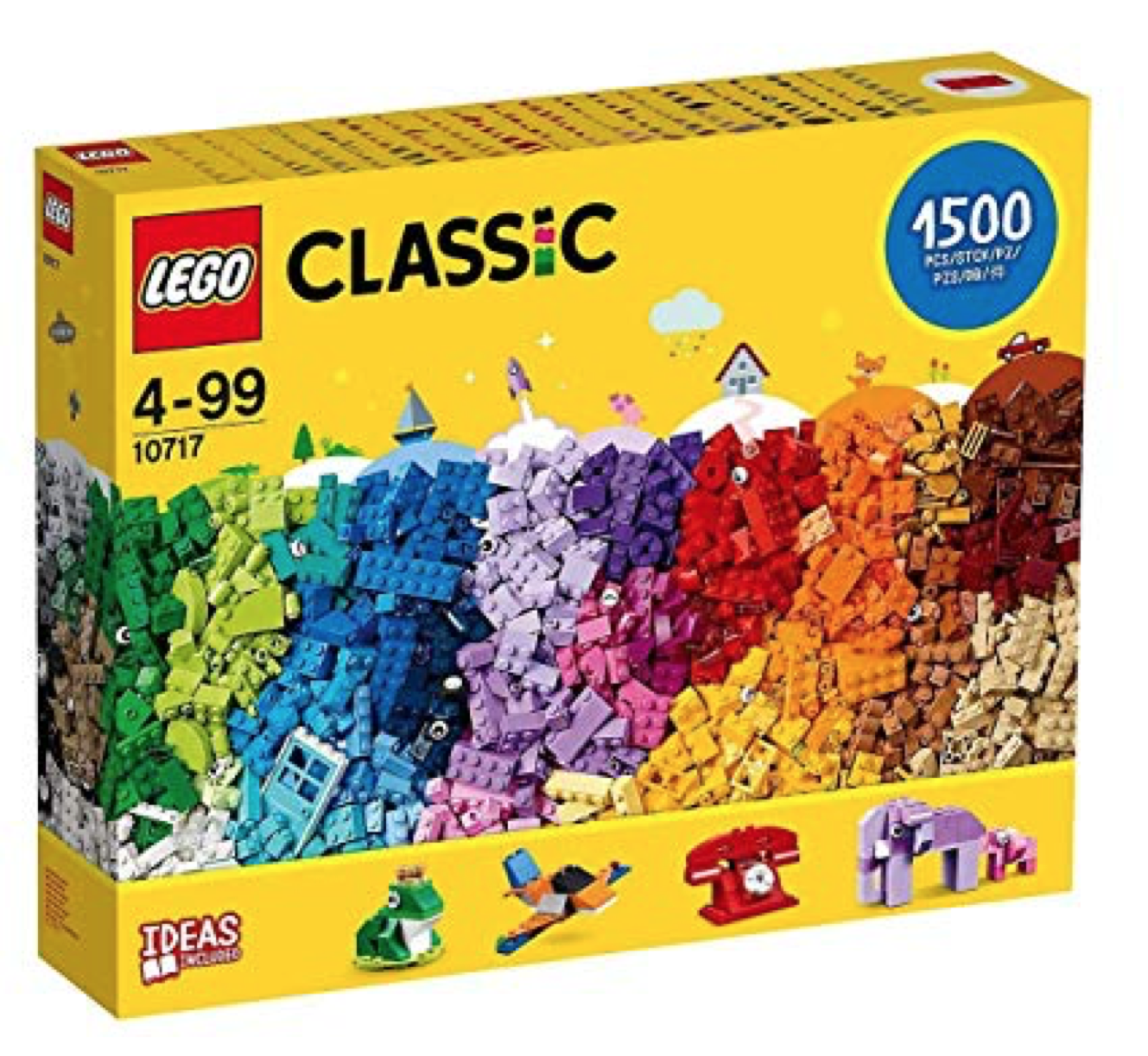
A “LEGO Classic Brick Set” will be provided to each child in the experimental group. Three validated assessments will be used at three points throughout the assessment. To measure numerical Literacy, we will use the Texas Assessment of Knowledge and Skills (TAKS; APA CITATION). For visuospatial working memory, we will use Working Memory Test Battery for Children (WMTB-C; Pickering & Gathercole, 2001). To measure science capabilities, we will use the University of New York Grade 4 Elementary-Level Science Test (2018). To measure self-efficacy, we will use the Generalized Self-Efficacy scale (Schwarzer & Jerusalem, 1995).
Procedure
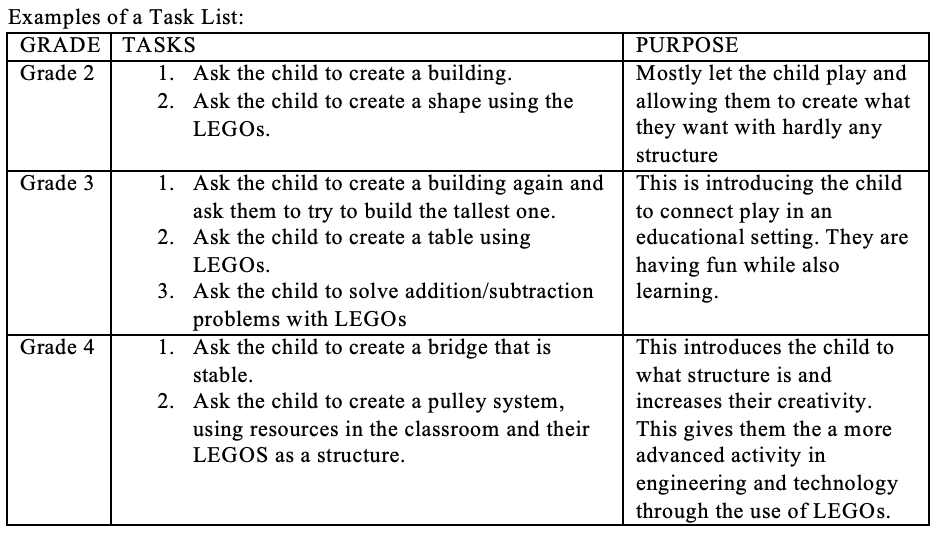
After-school program that provides one hour of LEGO playtime will be provided for the experimental group. This after-school program will last the duration of the school years from Grade 2 to Grade 4. The program will take place Monday through Friday for one hour. Each child will be provided with a personal “LEGO Classic Brick Set”. The hour-long program will entail independent LEGO play time as well as performing LEGO tasks given to them.
The final portion of the experiment will take place during the completion of 4th grade, in which the three validated surveys will be provided for the students. Upon the completion of the validated surveys, we will run an independent samples t-test, comparing the scores of the control group to the scores of the experimental group.
Anticipated Results
Several studies have led us to anticipate that the 30 experimental group students will display significantly higher scores in all three validated surveys. We expect the 30 students partaking in the LEGO after-school program to display high proficiency in numerical literacy, visuospatial working memory, as well as report higher levels of self efficiency. As hypothesized, we expect the 30 control group students, who did not partake in the after-school LEGO program, to display significantly lower scores in all three areas when compared to the experimental group. Because we are testing for three different factors that will impact a child’s math capabilities, there may be one or more factor/s that do/does not prove to be significant. We hope that by having students work individually, girls and boys who participate in the LEGO after-school program may show similar proficiency in each category.
Discussion
We believe our study is important because it would help educators create a better learning environment for their students where they are able to improve their STEM capabilities to the fullest extent. What’s new about our study is that we had a heavy reliance on mathematic skills as well as science skills. Other studies only discussed one or the other. By focusing on math and science, we were able to split math skills into three: numerical literacy, visuospatial working memory, and self-efficiency. What also sets us apart is the length of our study. We believe that a longer study would be helpful when looking at the long-term effect of LEGOs rather than a student’s immediate growth after using LEGOs for a short time.
We hypothesized that those who participate in the after-school LEGO program will score higher in the math surveys and science exam. This is because LEGOs have proven to improve problem-solving skills, especially when including technology and engineering-based activities. We hope that by having students work individually it limits the possibility of one student doing most of the work. Each student then has the opportunity of being able to improve their STEM capabilities.
It’s important that we also discuss factors that might affect our results or limit our study. For example, there is a possibility that students who begin the after-school program in the second grade might not continue to go up until they are in the 4th grade. While we may try to have 100% attendance for those who are in the after-school program, it cannot be guaranteed. This factor affects the longitudinal study since it was designed for every day attendance and participation. Depending on the number of student who do stay for the entire study, we may have a limited availability of data for long-term effects. This could be solved by possibly providing a survey or exam after each year of completing the LEGO program.
References:
Allen, K., Higgins, S., & Adams, J. (2019). The relationship between visuospatial working memory and mathematical performance in school-aged children: A systematic review. Educational Psychology Review.
LINK:https://doi-org.proxy.wexler.hunter.cuny.edu/10.1007/s10648-019-09470-8
Bandura, A., & Locke, E. A. (2003). Negative self-efficacy and goal effects revisited. Journal of applied psychology, 88(1), 87.
LINK:https://pdfs.semanticscholar.org/7f79/435acb134ec9d0807fdb172913eb7eb40815.pdf
Casler-Failing, Shelli. (2018). The Effects of Integrating LEGO Robotics Into a Mathematics Curriculum to Promote the Development of Proportional Reasoning. Proceedings of the Interdisciplinary STEM Teaching and Learning Conference. 2. 10.20429/stem.2018.020105.
Eric Zhi Feng Liu, Chun Hung Lin, & Chiung Sui Chang. (2010). Student Satisfaction and Self-Efficacy in a Cooperative Robotics Course. Social Behavior & Personality: An International Journal, 38(8), 1135–1146.
LINK: https://doi-org.proxy.wexler.hunter.cuny.edu/10.2224/sbp.2010.38.8.1135
Grissmer, D., Grimm, K. J., Aiyer, S. M., Murrah, W. M., & Steele, J. S. (2010). Fine motor skills and early comprehension of the world: two new school readiness indicators. Developmental psychology, 46(5), 1008.
LINK: https://www.ncbi.nlm.nih.gov/pubmed/20822219
Li, Y., Huang, Z., Jiang, M., & Chang, T.-W. (2016). The effect on pupils’ science performance and problem-solving ability through Lego: An engineering design-based modeling approach. Journal of Educational Technology & Society, 19(3), 143–156.
Nath, S., & Szücs, D. (2014). Construction play and cognitive skills associated with the development of mathematical abilities in 7-year-old children. Learning and Instruction, 32, 73–80.
LINK: https://doi-org.proxy.wexler.hunter.cuny.edu/10.1016/j.learninstruc.2014.01.006
Schwarzer, R., & Jerusalem, M. (1995). Generalized Self-Efficacy scale. In J. Weinman, S. Wright, & M. Johnston, Measures in health psychology: A user’s portfolio. Causal and control beliefs (pp. 35-37). Windsor, UK: NFER-NELSON.
LINK: https://www.drugsandalcohol.ie/26768/1/General_Self-Efficacy_Scale%20(GSE).pdf
Soltanlou, M., Artemenko, C., Dresler, T., Fallgatter, A. J., Ehlis, A.-C., & Nuerk, H.-C. (2019). Math anxiety in combination with low visuospatial memory impairs math learning in children. Frontiers in Psychology, 10.
LINK:https://doi-org.proxy.wexler.hunter.cuny.edu/10.3389/fpsyg.2019.00089
University of the State of New York. (2018) Grade 4 Elementary-Level Science Test. Written Test
LINK: http://www.nysedregents.org/grade4/science/618/els62018-exam-ac.pdf
Wolfgang, H. “Advanced Constructional Play with LEGOs Among Preschoolers as a Predictor of Later School Achievement in Mathematics.” Early child development and care 173.5 (2003): 467-475.
Tables and Figures
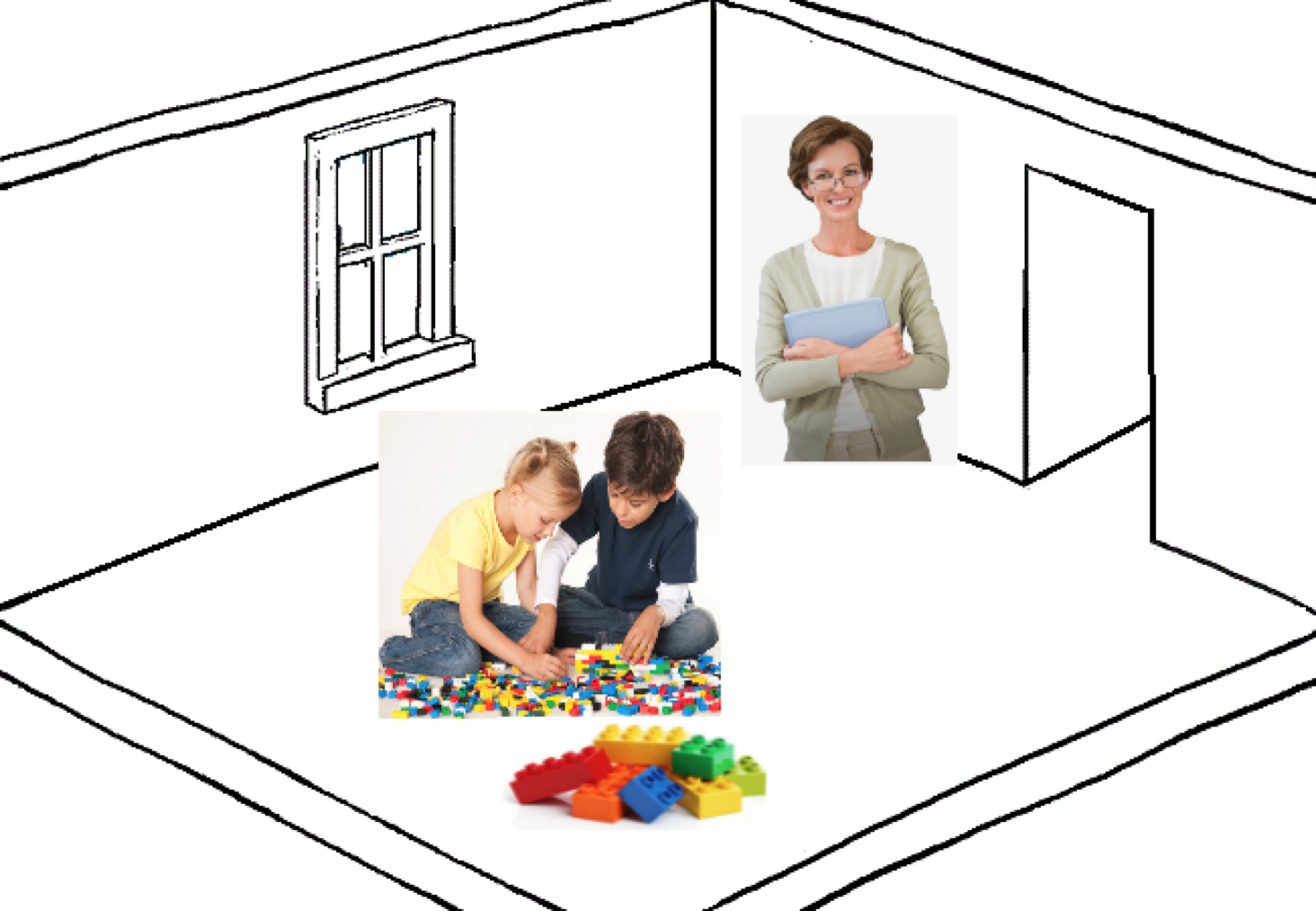
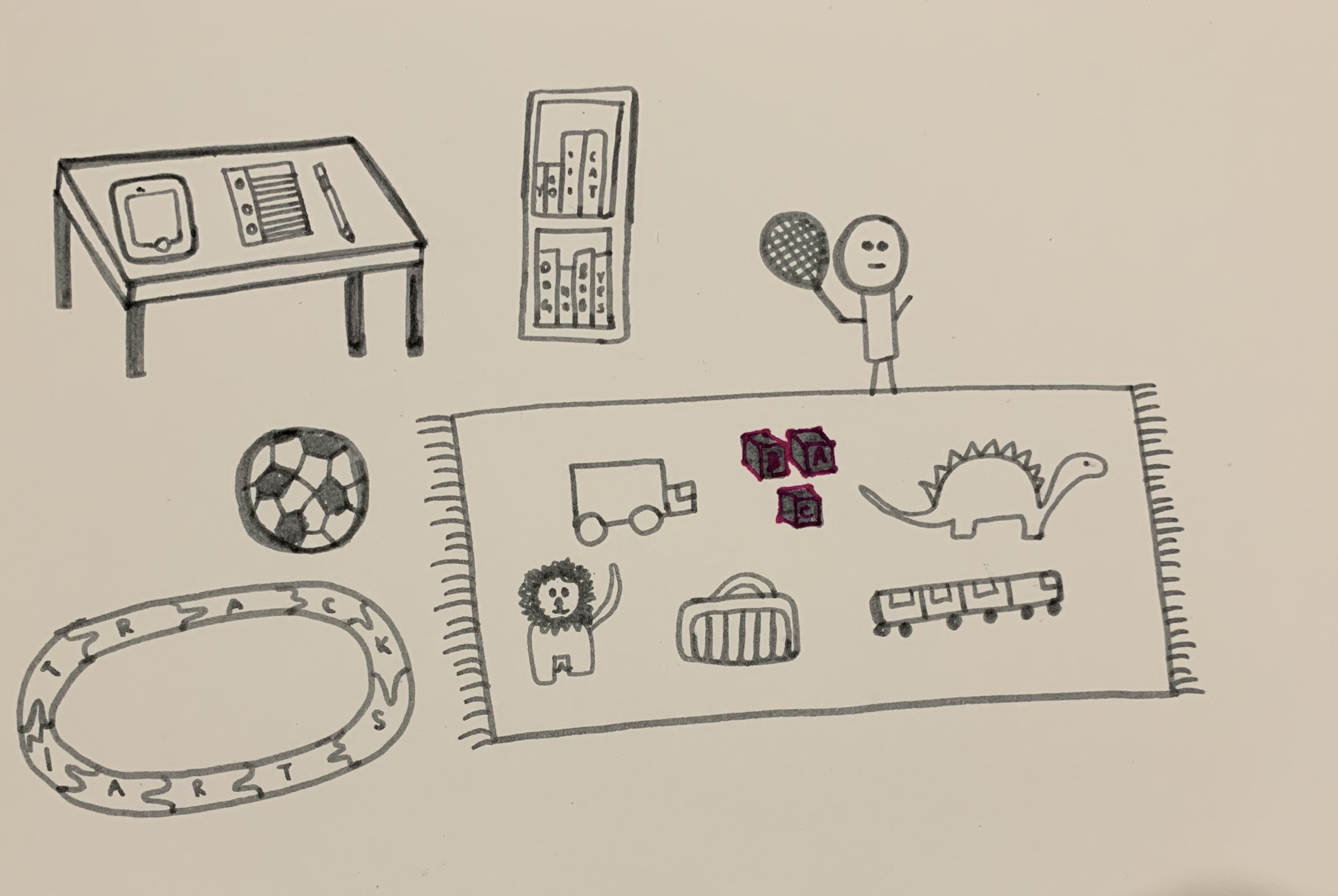
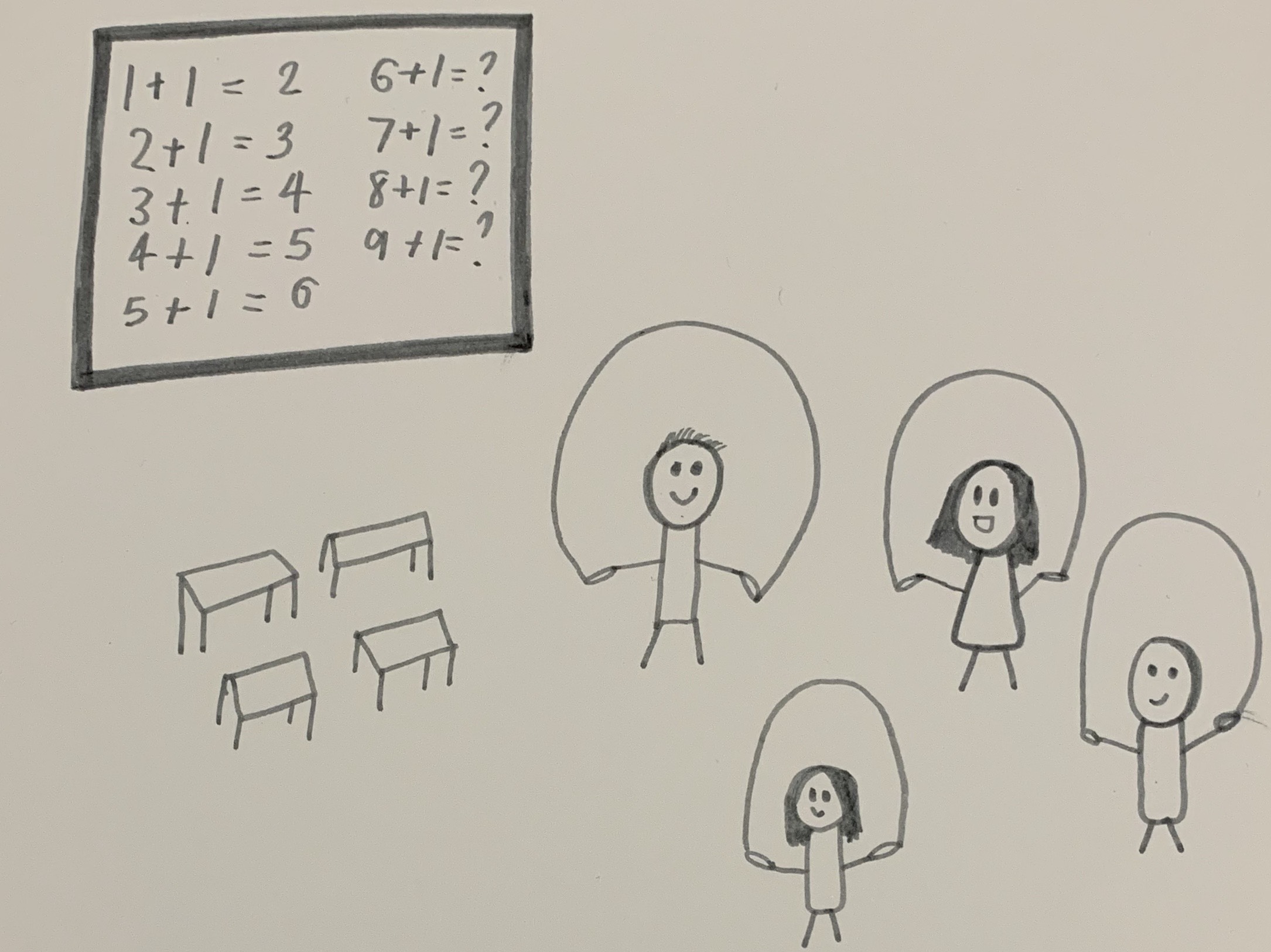
Figure 1. This is how we expect the rooms to look, though it is not exact. Additional blocks would be provided for each child.
Appendix

http://www.nysedregents.org/grade4/science/618/els62018-exam-ac.pdf